Midfield maestros – The men who dictated play
Champions Inter and surprise success Como had plenty in common this season: attacking, vertical, fearless football and, above all, a midfield unit capable of controlling every area of the pitch. Serie A 2025/26 presented a new generation of midfielders able to influence every phase of play: build-up, pressing, late runs into the box, creativity and goals. From Federico Dimarco’s record-breaking campaign to Nico Paz’s flair, the all-round quality of Manuel Locatelli and Scott McTominay’s imposing presence, midfield proved to be a true engine room this season.
Dimarco, king of assists
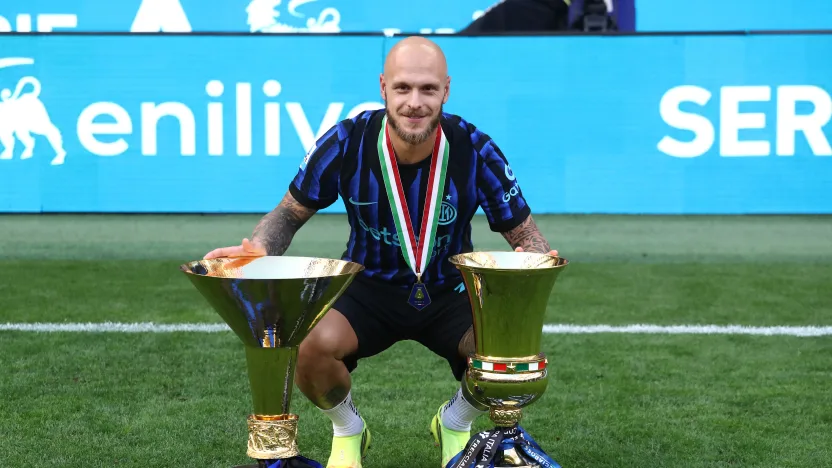
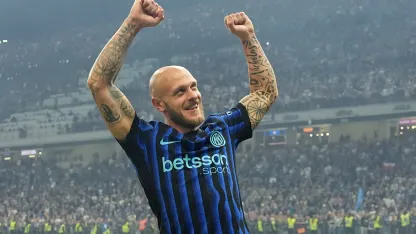
Federico Dimarco had it all. The Scudetto with Inter, the league’s Overall MVP award and a place in Serie A history. Transformed by Cristian Chivu into a complete attacking weapon, the Nerazzurri wing-back shattered the all-time Serie A assist record, finishing on 18 while also bagging seven goals — the best tally of his career. No player created more than him: first for key passes (85), crosses attempted (320) and successful crosses (101), Dimarco turned Inter’s left wing into an inexhaustible source of attacking production. His left foot produced a constant stream of goals and chances for the league’s most prolific attack. .
It wasn’t just about creativity: Dimarco continued to make his mark from set pieces too, as since the start of last season, he is the Serie A player with the most direct free-kick goals across all competitions (three). A complete season, redefining the traditional wing-back role and becoming a real wide playmaker
Nico Paz, the talent that lit up Como
The award for Best Midfielder went to Nico Paz, the talent who illuminated Cesc Fàbregas’ Como. Twelve goals and seven assists for the Argentine playmaker made him the second-most productive midfielder in the league, behind Dimarco. Paz enjoyed a truly starring campaign, becoming the creative focal point of Como’s football: first among midfielders for total shots (121), shots on target (46), long-range efforts (70) and attempts from set pieces (18). Fàbregas handed him complete freedom in the final third and the former Real Madrid talent’s left foot lit up the league with long-range goals (four), bursts of acceleration and moments of pure class. Beyond the attacking shine, though, there was defensive substance too. Paz ranked among the league’s best for tackles won (69), underlining the physical and competitive edge that completed his breakthrough season.
McTominay, Conte’s cornerstone
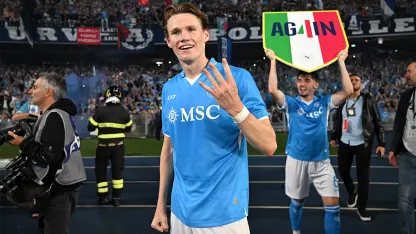
Scott McTominay confirmed himself as one of Serie A’s most dominant midfielders. Antonio Conte deployed him everywhere — as a box-to-box midfielder, holding midfielder, attacking midfielder and even on the left wing — and the Scot delivered every time, finishing with 10 goals and three assists. No midfielder generated more expected goals (11.733), while his attacking output resembled that of an additional striker: third overall in the league for total shots (97) and second among midfielders for shots on target (32).
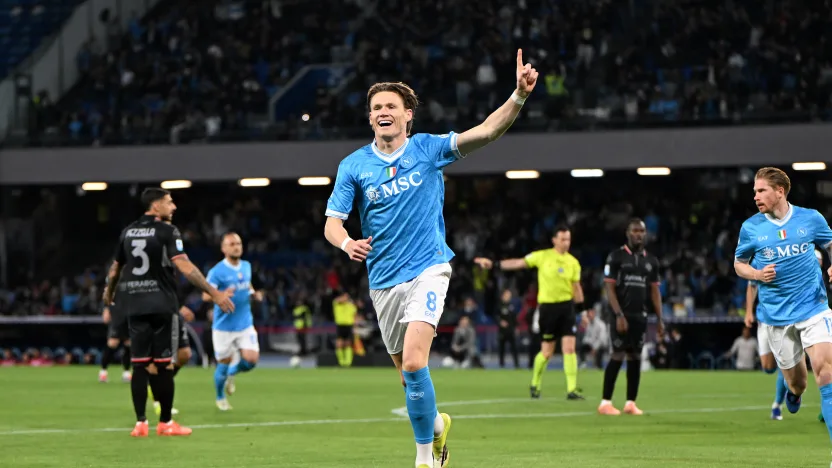
McTominay embodied Conte’s hard-working, forward-facing Napoli: relentless runs, devastating physical impact and a constant presence in the opposition area. The quality of his finishing also stood out, highlighted by his Iliad Goal of the Month awards in October and February.
Inter’s midfield machine: quality, balance and long-range firepower
Alongside a sensational Dimarco, Inter built their Scudetto triumph on a dominant midfield trio. Hakan Çalhanoğlu, Nicolò Barella and Piotr Zieliński ensured attacking production, control in possession and elite-level consistency.
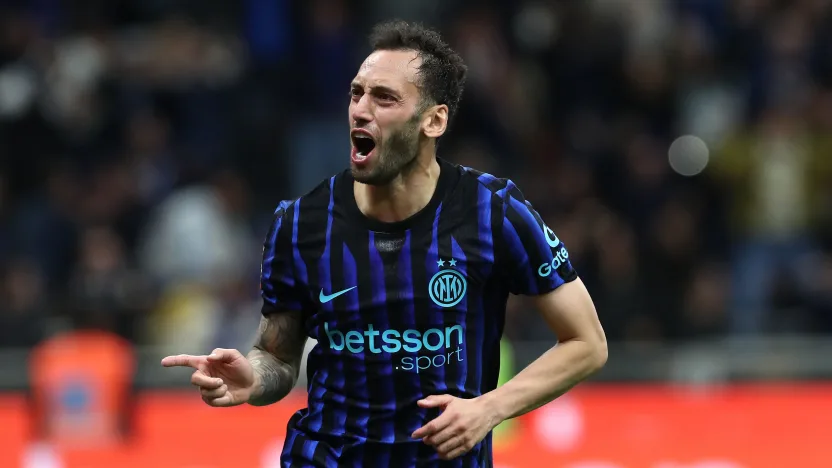
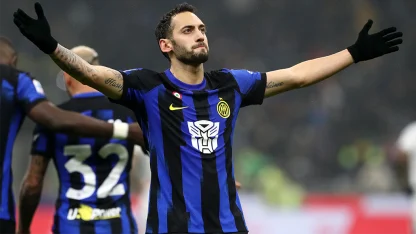
Çalhanoğlu enjoyed one of the finest seasons of his career: nine goals and four assists, but above all the best finishing overperformance in the league (+4.25 between goals scored and expected goals). The Turkish midfielder turned over half of his strikes into gold: nine goals from just 17 shots on target. A specialist from distance, he finished with five goals from outside the box, a league-high shared with team-mate Zieliński.
The Pole proved one of Chivu’s greatest inclusions. After a strong start, Zieliński raised his level even further in the second half of the season, recording six of his nine goal involvements in 2026 alone at San Siro. His thunderbolt against Juventus, voted Goal of the Month, stood out among the highlights.
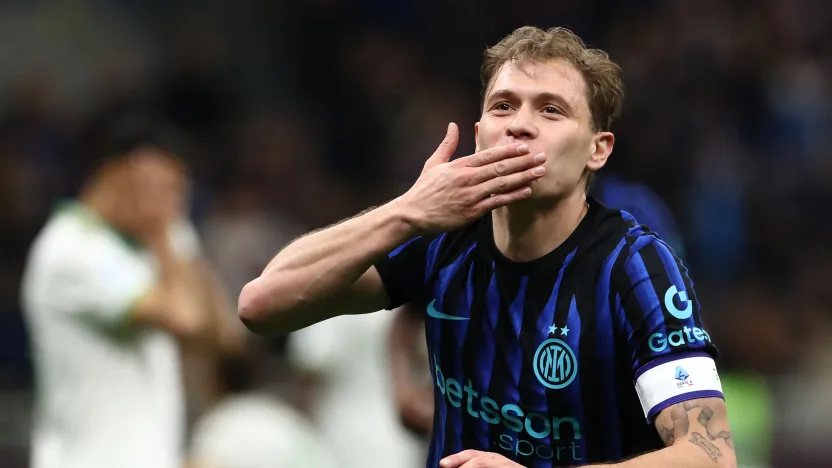
Barella, meanwhile, perfectly embodied the concept of the complete midfielder. Eight assists — the fourth-best tally in Serie A — but also an enormous volume of attacking involvement: first for completed passes in the opposition area (109) and third for key passes (65). His quality was matched by efficiency too, scoring three goals from just five shots on target.
Como’s workshop: flair, technique and pressing
Fàbregas’ Como found its beating heart in midfield. Behind star man Nico Paz, the Lariani system elevated technical and dynamic profiles such as Lucas Da Cunha, Martin Baturina and Máximo Perrone.
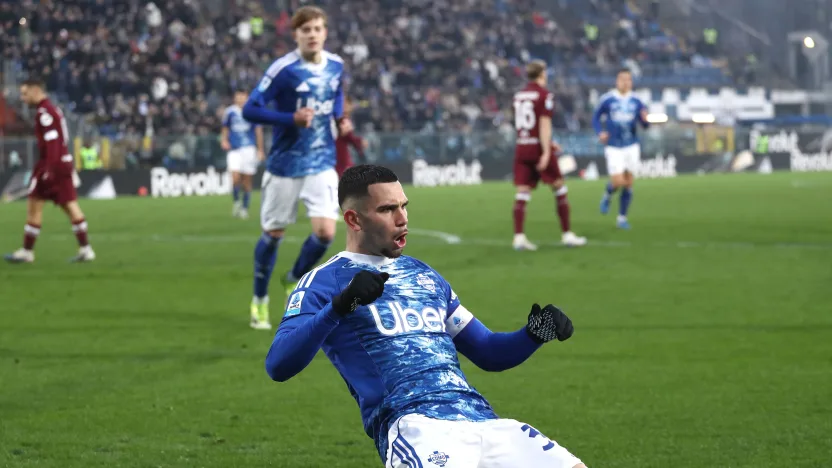
Da Cunha completed his transformation from attacking winger into a modern deep-lying playmaker. Moved deeper by Fàbregas and entrusted with the team’s build-up, the Frenchman responded with the best season of his career: six goals (four penalties) and five assists. Never before in his previous 63 appearances across Europe’s top five leagues had he contributed so much to the attacking phase.
After an initial adaptation period, Martin Baturina exploded into life during the winter months. January marked his breakthrough: three goals and three assists in four consecutive matches, earning him the Rising Star of the Month award. The Croatian finished with six goals and three assists, remarkable efficiency in front of goal — six goals from only nine shots on target — and the league’s second-best finishing overperformance (+4.12).
Máximo Perrone, meanwhile, acted as the glue in Como’s system. Structure, balance and rhythm: fourth for completed passes and second for sideways passes behind Locatelli, the Argentine also added three goals and four assists, developing into an increasingly complete and versatile midfielder.
Other standouts: quality, energy and leadership
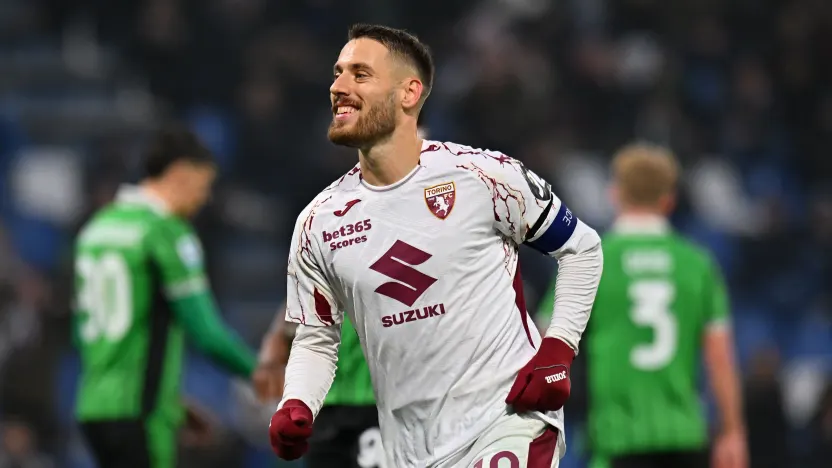
Nikola Vlašić confirmed himself as Torino’s attacking talisman. Eight goals and three assists matched the best return of his career in terms of goal involvements, but perhaps the statistic that best captures his influence is his work ethic: the Croatian ranked seventh overall for total distance covered in Serie A.
Rolando Mandragora, meanwhile, reached new attacking heights. His seven goals marked a personal best in Serie A and reflected the evolution of a midfielder increasingly decisive in the final third. Four goals from outside the box placed him just behind Çalhanoğlu and Zieliński among the league’s long-range specialists.
Weston McKennie became Juventus’ all-purpose player under Luciano Spalletti. Used virtually everywhere, the American provided balance, pressing and attacking runs, finishing with double figures for goal involvements in a top-five European league for the first time in his career: five goals and five assists.
Adrien Rabiot, back in Serie A following his spell in Marseille, helped guide AC Milan through the most difficult moments of the campaign. Six goals and four assists for the Frenchman, often decisive in tight matches thanks to his ability to drive forward with the ball and attack the penalty area.
Young midfielders who stole the spotlight
Among Italians, Cesare Casadei found new form. Six goals, four of them headers — a record beaten only by Mateo Pellegrino. Constant runs, physical presence and composure in the box made the 2003-born midfielder one of Torino’s breakout stars.
Artur Atta also enjoyed an impressive campaign: five goals and three assists for Udinese’s young French midfielder, who recorded his first Serie A brace this season. Among midfielders with at least one multi-goal game, only Nico Paz is younger.
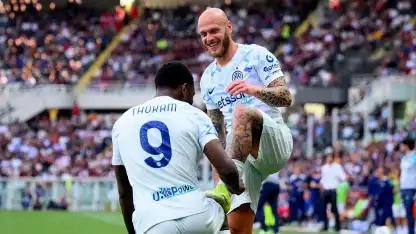
At Sassuolo, Ismaël Koné shone as a modern box-to-box midfielder defined by energy and timing. Six goals for the Canadian — a tally only previously achieved among Sassuolo midfielders by Traoré and Frattesi.
The complete performer
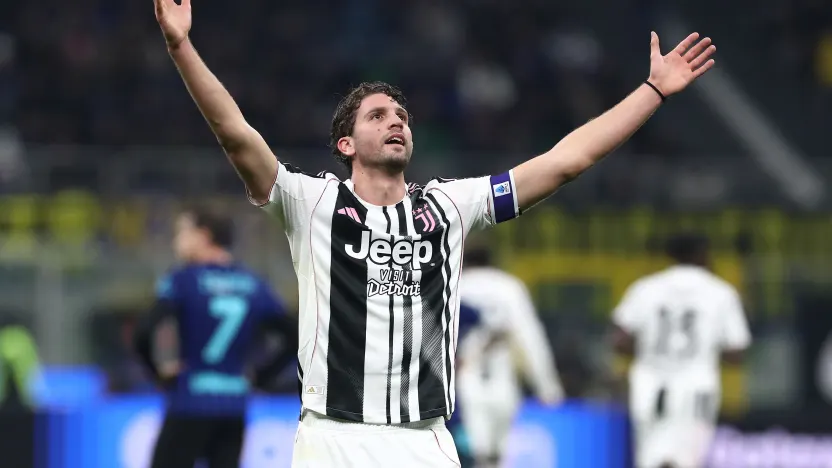
Modern football asks midfielders to do everything: build, recover possession, progress play and occupy spaces. No one interpreted the role better than Manuel Locatelli. Juventus’ captain was the league’s complete regista: first for average forward passes in the attacking half (19.9), third for tackles won (77) and third for completed passes into the opposition box (103). Numbers that illustrate a player equally effective in build-up and ball recovery.
Bryan Cristante and Luka Modrić completed the podium of elite playmakers. The Croatian, in particular, stood out for his attacking vision: nobody registered more secondary assists than him (five), a statistic that perfectly captures his ability to read the game seconds before everyone else.
Morten Frendrup confirmed himself as the king of tackles for the third consecutive season, winning 84 duels. Pierotti’s second-place ranking (82) was one of the surprises of the year, deployed by Eusebio Di Francesco as an auxiliary wing-back in Lecce’s defensive structure.
Alexis Saelemaekers brought flair to the league with his dribbling: second for successful take-ons (121) and fifth for passes completed into the opposition area (83).
Finally, Ylber Ramadani — Lecce’s quiet anchor. The Albanian midfielder orchestrated the Salentini press through intelligent positioning and anticipation, finishing top of the league for interceptions (193) while also ranking among the players who covered the most distance, alongside Cristante and Frendrup.