
From Rome to Milan: Two Cities Leading the Way
Eleven matchdays, four teams and just two cities battling for the top spots in Serie A. Rome and Milan dominate the top of the table, turning the title race into a contest between two major cities in Italian football. It is an unusual geographical divide, with local rivalries adding another dimension to the battle at the top.
AC Milan completed the top four with a win over Genoa at Marassi, moving ahead of Como following their defeat to Inter at San Siro. The Rossoneri climbed back into fourth place, restoring the same top four seen after Matchday 7 and 8. Lazio lead the way with 29 points, followed by Inter on 28, Roma on 27 and AC Milan on 24. Just five points separate the four sides, with both Roman clubs still unbeaten and their Milanese counterparts in pursuit.
But just how unusual is it for four teams from only two cities to occupy the top four places in Serie A? The league's history offers some notable moments to look back on, including seasons that have left a lasting mark on Italian football.
From Superga to Sampdoria’s Scudetto: past events
One of the most notable examples dates back to 1948/49, the final season of the Grande Torino era. The Granata secured their fifth consecutive Scudetto, but their triumph was overshadowed by the Superga tragedy on 4 May 1949, which brought the story of one of the greatest teams of all time to a tragic end. Inter, AC Milan and Juventus finished behind them, in that order, meaning clubs from Turin and Milan occupied all four of the top spots.
The same two cities dominated again in 1975/76, this time with an even more balanced split. Torino finished first, Juventus second, AC Milan third and Inter fourth. It was the season of Torino’s historic Scudetto under Gigi Radice, powered by the goals of Pulici and Graziani, the famous Gemelli del Gol (Goal Twins).
An even more memorable example came in 1990/91, when clubs from Genoa and Milan occupied the top four places. Vialli and Mancini led Sampdoria to the first and, to date, only Scudetto in the club’s history, finishing ahead of Arrigo Sacchi’s AC Milan and Giovanni Trapattoni’s Inter, who were level on points in second place. Osvaldo Bagnoli’s Genoa completed the top four after one of the finest seasons in the Rossoblù’s history.
Roma and Milan have also previously occupied all four of the top spots. In 2006/07, for example, Roberto Mancini's Inter won the Scudetto ahead of Luciano Spalletti's Roma, with Lazio finishing third and AC Milan fourth. That season, the Nerazzurri set a record of 17 consecutive league wins, while the Rossoneri went on to lift the Champions League trophy in Athens.
Record-breaking Rome clubs: unbeaten runs and rock-solid defences
The form of the two Rome clubs makes the current standings even more remarkable. For the first time in Serie A history, two teams from the same city have both gone unbeaten in their opening eleven league matches. Lazio and Roma are the only sides yet to suffer defeat, with the defensive records of both teams playing a key role. The Biancocelesti boast the best defence in the league, having conceded just nine goals, while the Giallorossi are close behind with ten.
The two teams have also stood out for the variety of their attacking options. Both have already had twelve different goalscorers, highlighting their ability to spread the goals across the squad. They have achieved similar results, but through different approaches and playing styles.
Gattuso's Lazio have built their lead at the top of the table with nine wins and two draws, against AC Milan and Napoli. Their record is almost flawless, outperforming what several statistical indicators might suggest. The Biancocelesti rank tenth for shots on target and eleventh for expected goals (xG), yet sit third for goals scored. Their clinical finishing is matched by their defensive efficiency. Despite ranking fifth for expected goals against (xGA) and ninth for shots on target conceded (49), Lazio have let in fewer goals than any other side. The numbers underline just how effective Gattuso's team have been at both ends of the pitch.
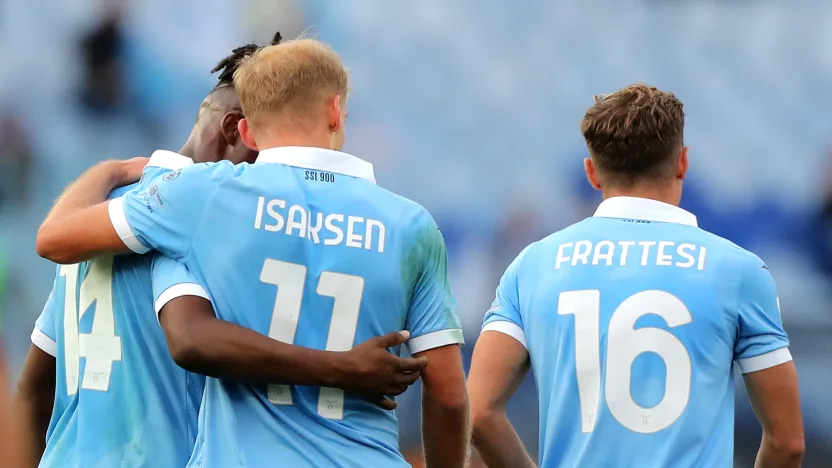
The contributions of individual players further highlight Lazio's attacking versatility. Frattesi, Isaksen and Noslin have each scored four goals, sharing the lead in the club's scoring charts. This even spread means Lazio are not reliant on a single goalscorer, with different players stepping up when needed.
Roma, meanwhile, have built their impressive record on an exceptional attacking output. The Giallorossi's 31 goals in their opening eleven matches rank them among the most prolific teams at this stage of a Serie A season in the last 65 years. Only Juventus and Napoli in 2017/18 scored more, with 33 and 32 goals respectively, while Lazio also reached the 31-goal mark that season.
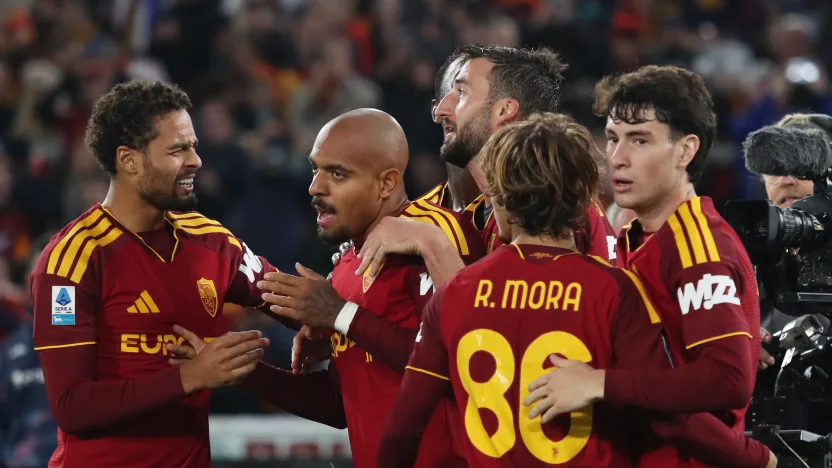
Donyell Malen has been Roma's main attacking threat, scoring eight goals so far, but the Giallorossi are far from reliant on the Dutchman. Their range of attacking options, combined with the second-best defence in the league, has helped Roma maintain their place among the frontrunners.
The upcoming fixtures will provide a clearer picture of just how strong the two Rome clubs' title credentials are. The Derby della Capitale will kick off in four matchdays, with a particularly demanding end to the first half of the season for Lazio, who face Roma, Frosinone, Fiorentina, Inter and Como in that order. For Roma, alongside the derby, the clashes with Juventus and AC Milan will be the biggest tests of their ability to challenge at the top of the table.
The Milan clubs keep pace
Inter and AC Milan remain in contention, with just one defeat each. The Nerazzurri lost the derby and surrendered top spot to Lazio, while the Rossoneri had suffered a comeback defeat to Bologna in the previous midweek round.
Just one point behind the league leaders, Inter boast the second-best attack in Serie A with 28 goals, while the underlying numbers suggest they have even more to offer going forward. Chivu's side lead the league in expected goals (xG), shots on target and touches in the opposition box, highlighting an attacking output that has yet to be fully reflected in their goal tally. Their form is all the more impressive given the prolonged absence of Lautaro Martínez, one of Inter's key attacking players. His return to full fitness could provide a further boost to an attack already among the most prolific in Serie A.
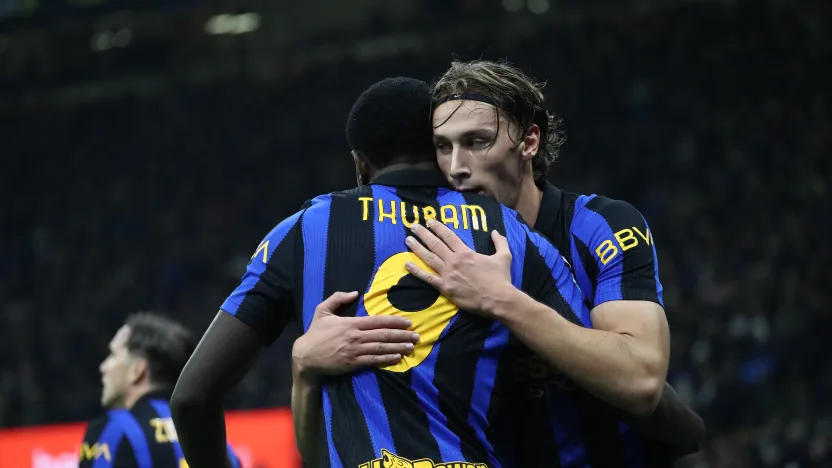
Inter's defensive numbers are equally encouraging. The Nerazzurri have conceded 13 goals, the fourth-best record in the league, but rank second for expected goals against (xGA), total shots conceded and shots on target conceded. These figures suggest a team with the potential to improve even further.
AC Milan, meanwhile, have a different profile, starting with how their goals are distributed. Rabiot and Cisse have scored five each, while Moreira and Pulisic have four each. Together, they account for 18 of the Rossoneri's 23 goals, nearly four out of every five. This highlights the importance of AC Milan's key attacking players, who have consistently made a difference to the team's results.
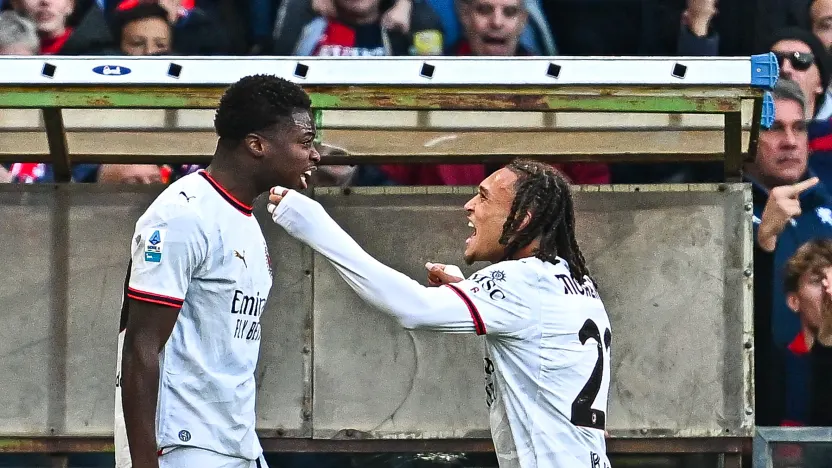
Amorim's side have shown they can rely on a starting eleven packed with quality and experience, capable of deciding matches through the individual brilliance of their key players. It is a valuable asset, although AC Milan lack the same squad depth as their Nerazzurri rivals.
In terms of playing style, AC Milan's passing game remains one of their defining strengths, as shown by their third-place ranking for both average possession and successful passes per match. Their attacking numbers, however, paint a more mixed picture: fifth for goals scored and seventh for expected goals (xG), but just seventeenth for total shots. This disparity highlights the need to turn possession into more chances, with the quality and clinical finishing of their key players making up for that shortcoming so far.
The upcoming fixtures will provide a clearer picture of both clubs' ambitions. Inter will face Lazio in the penultimate round of the first half of the season before hosting Juventus at the halfway point. For AC Milan, the clashes with Napoli, Como and Roma, the last of which comes in the final round of the first half of the campaign, will be key tests of their ability to keep pace with their direct rivals.
The season is still long, and the chasing pack will be looking to close the gap. For now, though, the road to the top appears to have just two stops: the Eternal City and the Madonnina.