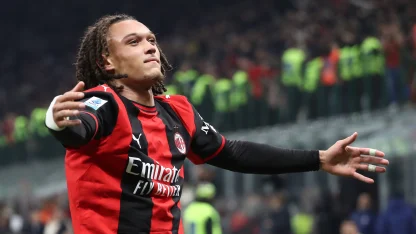
Fiorentina vs. Juventus: A Clash of the 2007 Generation
Fiorentina vs. Juventus at the Franchi is never an ordinary fixture. Decades of tension, more recent controversies and a fierce rivalry have made this one of Italian football's most passionately contested encounters. For Fiorentina in particular, facing the Old Lady provides an extra incentive, and their recent record speaks for itself. The Viola are unbeaten in their last four meetings with Juventus, recording two wins and two draws.
At the Franchi in March 2025, Fiorentina ran out convincing 3-0 winners, a defeat so damaging for Juventus that it cost Thiago Motta his job. Last season, despite a particularly difficult campaign for the Viola, both meetings with Juventus provided a much-needed lift for the club and their supporters. The highlight came with an away victory at the Stadium on 17 May, which ended the Bianconeri's European hopes.
Vanoli will be hoping to draw on the magic of Fiorentina vs. Juventus once again, building on the win over Sassuolo as he looks to steer his side away from the relegation battle. Spalletti, meanwhile, is determined to end Juventus' winless run in this fixture, with victory at the Franchi offering another boost to confidence and morale in the Bianconeri camp.
The spotlight will also be on two players whose stories in this rivalry are only just beginning. Franco Mastantuono and Kerim Alajbegović, two of the most exciting prospects of their generation, are set to cross paths at the Franchi.
Two talents, two different paths
14 August 2007, Franco Mastantuono. 21 September 2007, Kerim Alajbegović. Born just over a month apart, the two youngsters could find themselves separated by little more than the halfway line on Sunday evening. The Argentine operates on the left of Fiorentina's attack, while the Bosnian occupies the right flank for Juventus. Their positions on opposite wings could turn an intriguing individual comparison into a direct duel on the pitch. Both rank among the most creative and unpredictable players in their respective attacks, yet despite their similar ages, they are at different stages of their development.
Mastantuono already has experience at the highest level of European football with Real Madrid, as well as a wealth of appearances in the Argentine league. Since arriving in Florence, he has quickly established himself as a regular in Vanoli's side, taking on a key role in their attacking play. For Alajbegović, meanwhile, Juventus represents his first real opportunity at a major European club. Spalletti has taken a more measured approach to his development, although Yıldız's injury has opened the door to Serie A football and given the Bosnian a chance to showcase his talent.
The difference in their roles and responsibilities is reflected in their playing time: 789 league minutes for Mastantuono compared to 437 for Alajbegović. The Argentine has had almost twice as much time to make his mark and has already scored four goals, while the Bosnian has registered one goal and one assist. But the statistics only tell part of the story. A closer look reveals the qualities they share and, more importantly, what sets them apart.
Dribbling and an Eye for Goal
Mastantuono is one of the most adventurous attacking players in Serie A Enilive. No player has registered more touches in the opposition box (70) or attempted more dribbles (56) than the Fiorentina youngster, who also ranks second for shots (38) and third for successful dribbles (21). His constant attacking involvement highlights just how heavily Fiorentina rely on his ability to take on defenders, create space and fashion shooting opportunities.
Alajbegović has attempted fewer dribbles but boasts a higher success rate, completing nine of his 18 attempts (50%), compared to approximately 37.5% for the Argentine. It is an early indication of their contrasting approaches: Mastantuono looks to beat his man at every opportunity, while Alajbegović is more selective about when to take on defenders.
One quality they share, however, is their willingness to shoot. Both rank among the most prolific wide players in terms of shooting frequency. Mastantuono leads the way with 4.3 shots per 90 minutes, while Alajbegović sits fifth with 3.9. The Bosnian is slightly more accurate, averaging 1.4 shots on target per 90 minutes compared to Mastantuono's 1.3, despite shooting less frequently. The biggest difference lies in where they take their shots from. Mastantuono has taken 24 of his 38 attempts from inside the penalty area, making the most of his ability to attack space and get into dangerous positions. Alajbegović, by contrast, prefers to try his luck from distance, with 13 of his 19 shots coming from outside the box.
Two different approaches to attacking football, united by a shared confidence in their abilities. A naturally left-footed player in the great tradition of South American talents, the Argentine frequently looks to create space for a shot. The Bosnian favours his right foot but has already shown he is equally capable of producing spectacular strikes with his left. His stunning left-footed effort to open the scoring against Napoli was a perfect example.
Creativity and Work Rate: Two Different Approaches
The differences go beyond their shooting preferences. The demands of their respective coaches and their roles within each team's tactical system also shape how the two youngsters contribute to their sides' overall play.
Mastantuono has already established himself as one of Fiorentina's main attacking outlets. He sees plenty of the ball, plays an active role in build-up play and constantly looks to make things happen, inevitably attracting the attention of opposition defenders. It is therefore no surprise that he has been challenged 21 times compared to just three for Alajbegović, or that he has lost possession more frequently: 27 times compared to seven. These figures also reflect his greater involvement, the additional minutes he has played and his willingness to take risks.
The Bosnian, meanwhile, offers a less eye-catching but equally valuable contribution to Spalletti's system through his work in the attacking press. Averaging 1**.4 ball recoveries in the opposition's final third per 90 minutes**, Alajbegović ranks third among the league's attacking wide players, more than double Mastantuono's average of 0.6. It is a statistic that underlines the Juventus youngster's willingness to work hard off the ball and play his part in the team's collective pressing.
On one side, a young talent already entrusted with major responsibilities in attack. On the other, a winger learning to make the most of his abilities within a more structured system.
At the Franchi, Mastantuono and Alajbegović will have the chance to show that even in a fixture of such significance, there is more than one way for talent to shine. And in a match steeped in history and expectation, perhaps the difference will come down to the fearlessness of two youngsters with everything still ahead of them.